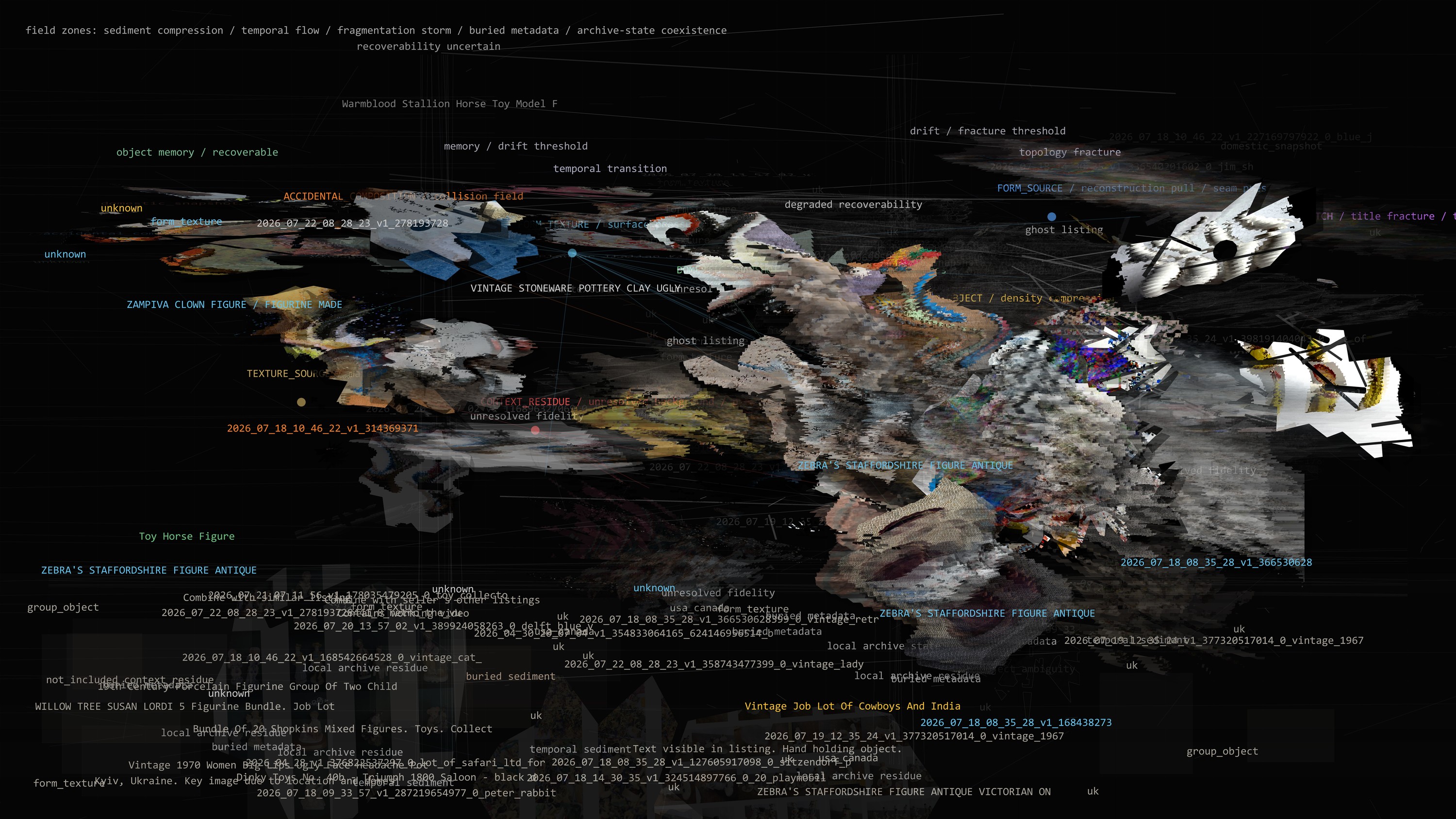
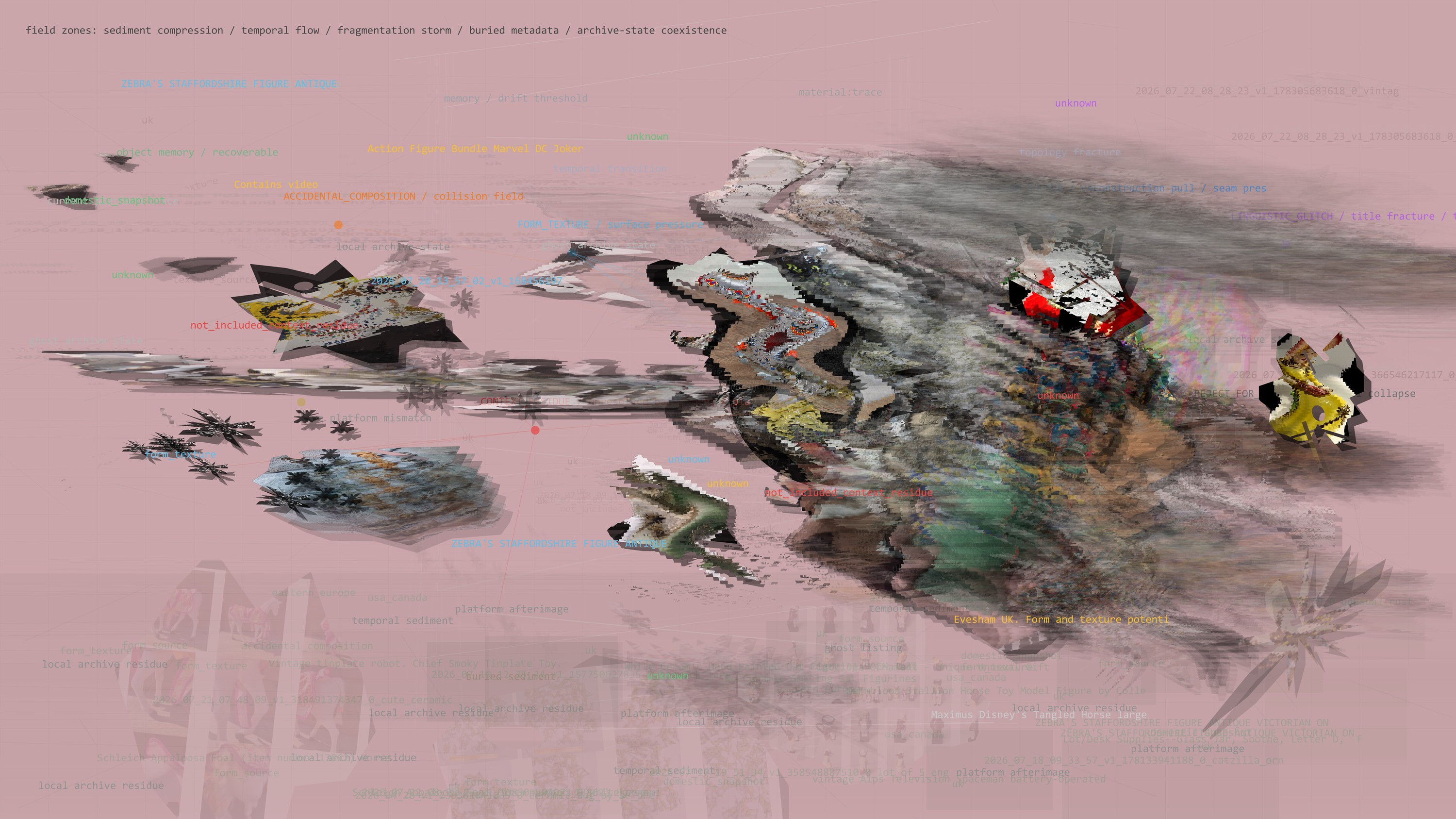
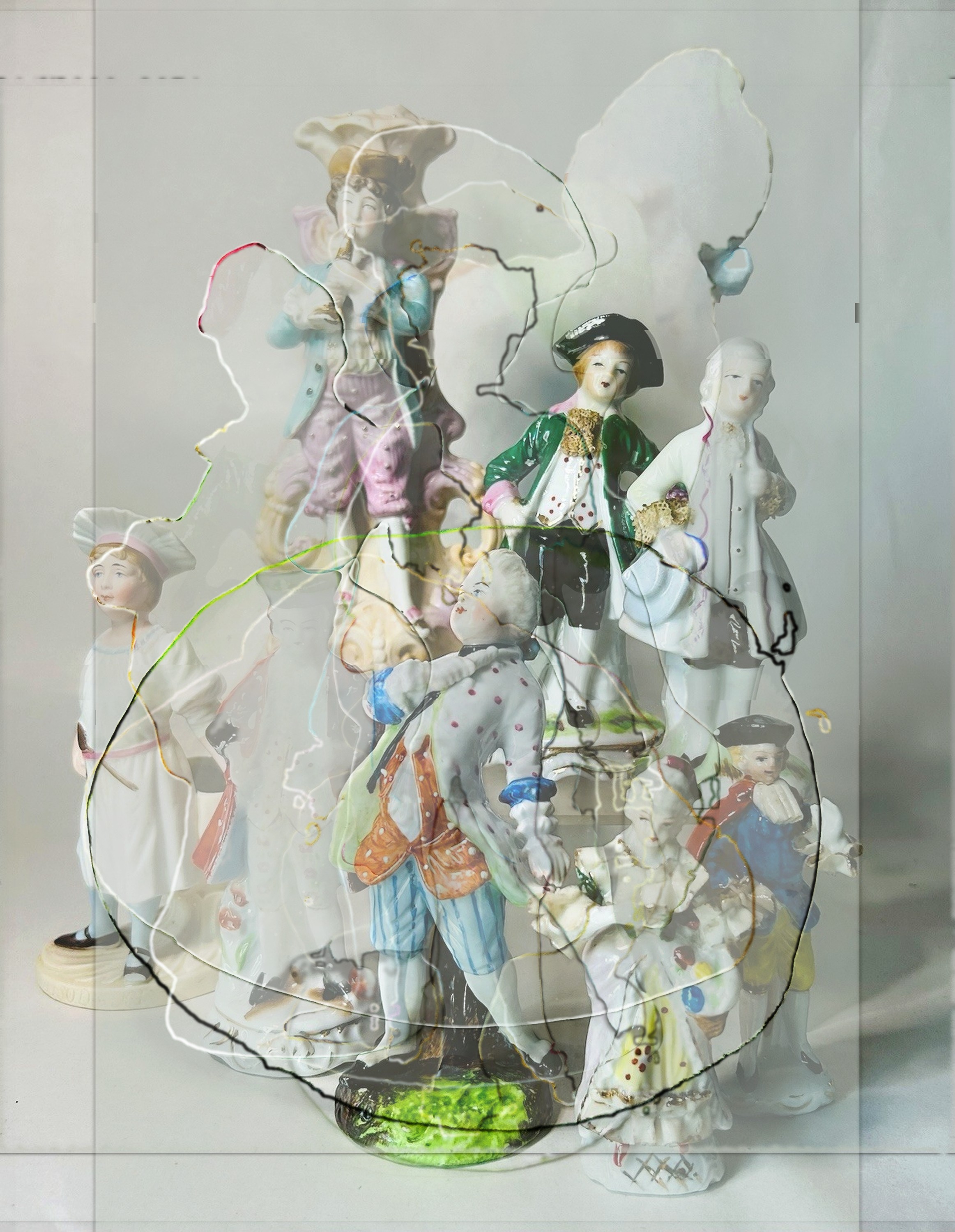
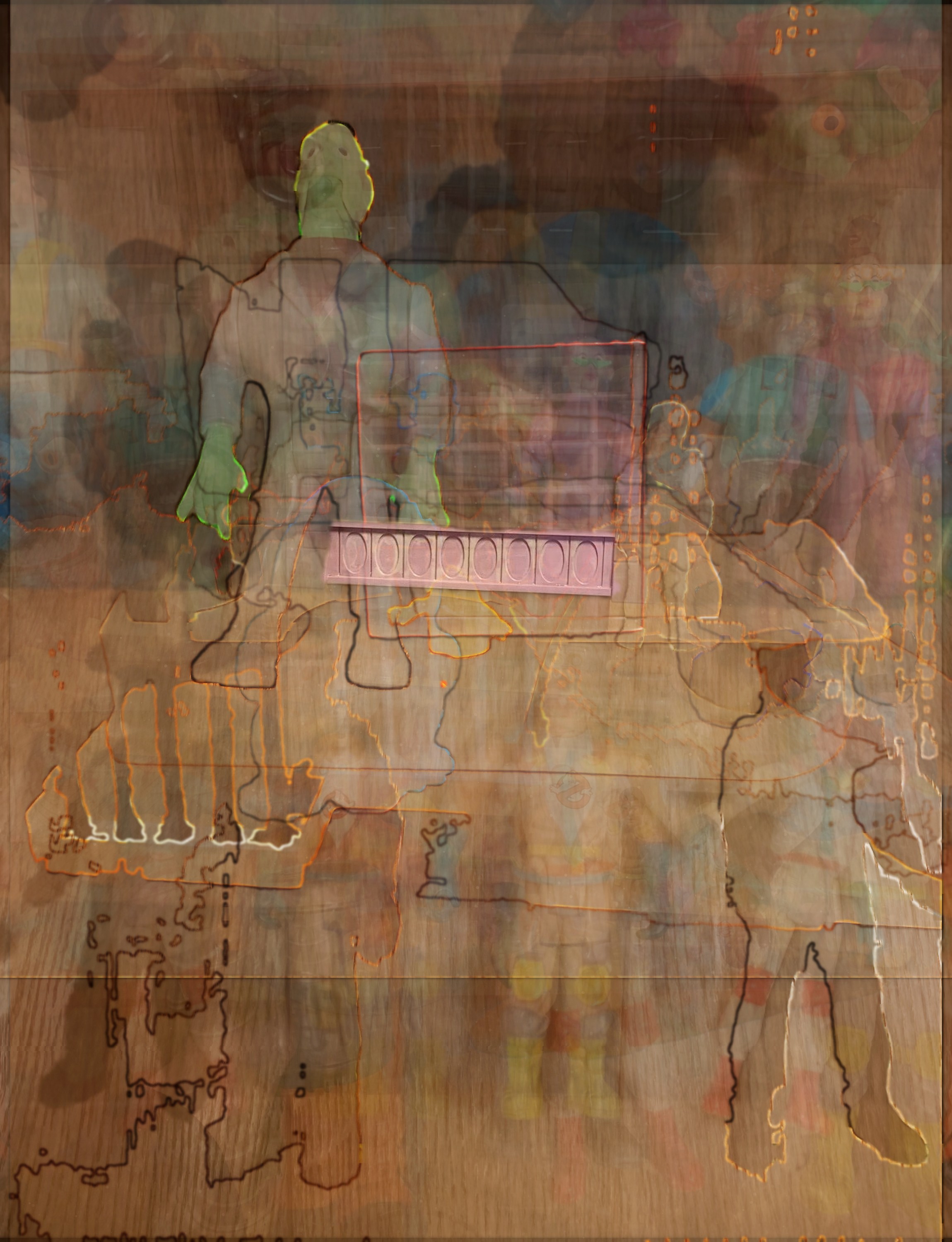
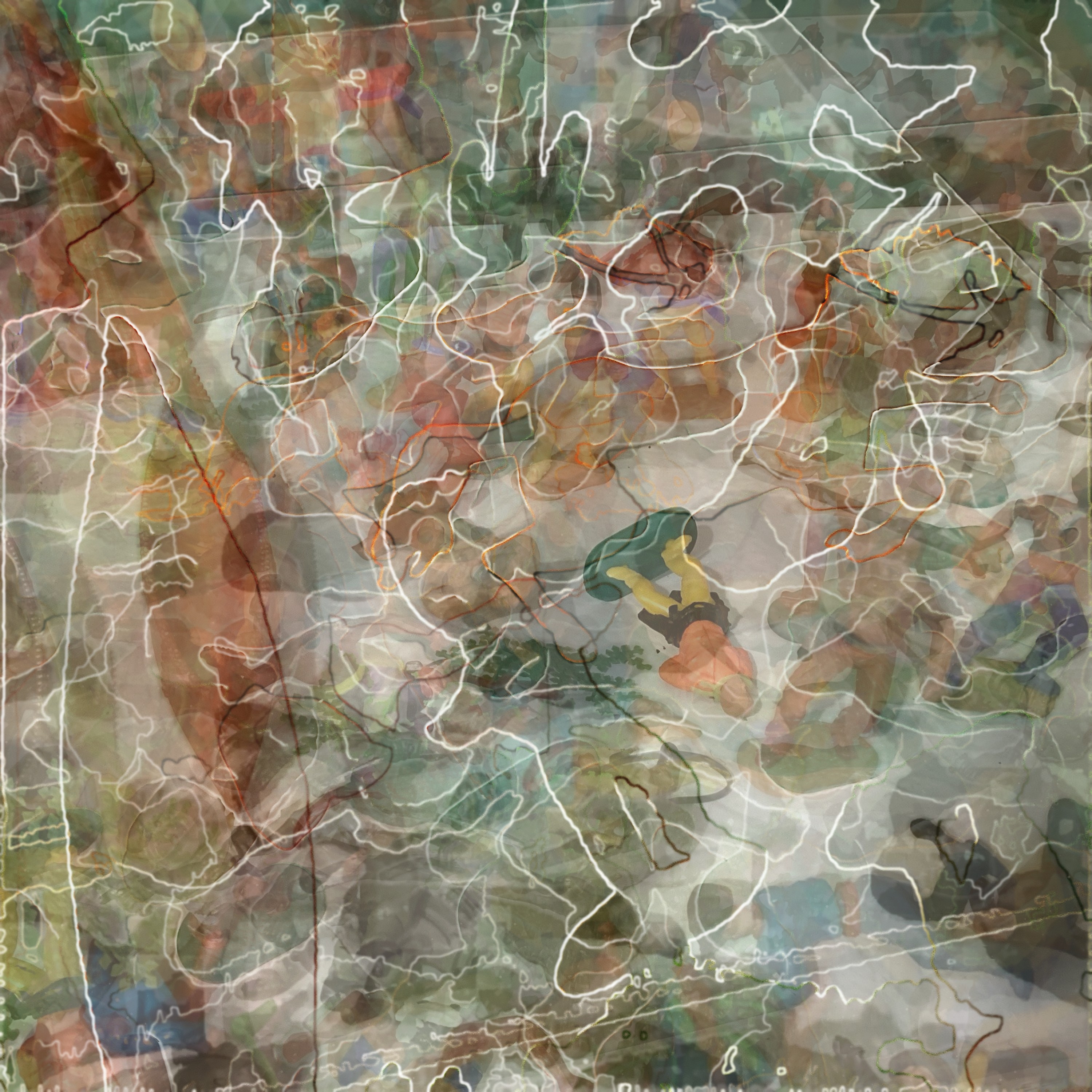
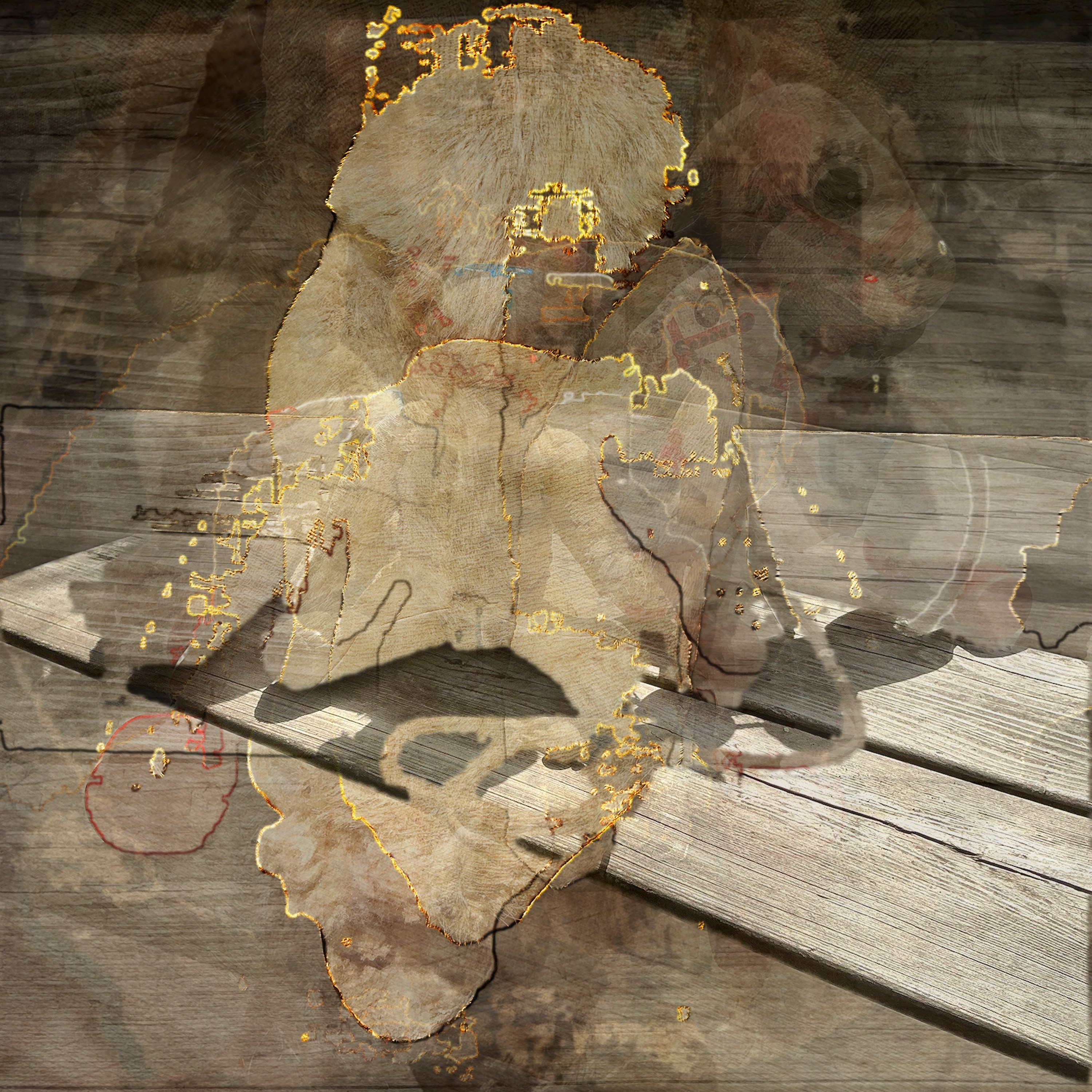
Archive Pressure begins with the temporary visual culture of online marketplaces. Photographs, videos, listing titles and metadata are harvested from eBay and assembled into an evolving archive. Originally produced to describe objects and facilitate their sale, these records also contain accidental information: domestic interiors, surfaces, backgrounds, hands, packaging and other traces of the environments through which objects circulate. In this sense, the source photographs operate as a form of contemporary still life: found objects recorded within the incidental spaces of online commerce.
Rather than using this material as imagery to be directly composed, Hughes constructs computational systems through which the archive is reorganised. Source photographs are interpreted as relationships between primary objects, their supports and their surrounding fields. Different systems establish different hierarchies, orders and degrees of pressure between these elements, generating populations of possible images rather than predetermined compositions.
The resulting works occupy an unstable position between representation and abstraction. Fragments of objects and photographic space persist, disappear, overlap or become structurally detached from their original contexts. Recognition remains possible, but is continually placed under pressure by the systems through which the archive passes.
The artist’s role shifts accordingly. Rules and conditions are constructed, large populations of outcomes are generated, and individual states are subsequently encountered and selected. The works therefore emerge through an exchange between deliberate structure and events that cannot be completely anticipated in advance.
Across print and moving image, Archive Pressure considers the archive not as a fixed repository but as an active structure capable of transformation. Material removed from temporary commercial circulation acquires new relationships, histories and forms of provenance as it passes through successive computational processes.
The project increasingly asks what might happen when generated material is allowed to return to the archive itself: when outputs become descendants, descendants acquire ancestry, and that ancestry begins to influence subsequent generations. Ultimately, the archive might be closed to new external material altogether, leaving a finite body of harvested information to repeatedly reorganise and generate from its own accumulated history.
The vitrines accompanying the exhibition document the processes, systems and developing genealogy through which these works are produced.